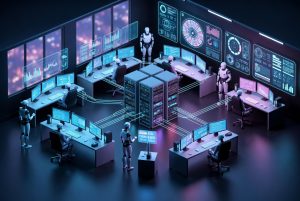
Artificial Intelligence has carved out a significant space in the realm of cybersecurity, acting as both a formidable ally and a potential adversary. The digital landscape, ever-expanding with interconnected systems and sensitive data, is a battleground where threats evolve at a relentless pace. AI, with its ability to analyze vast datasets and detect patterns, offers tools to bolster defenses. Yet, in the hands of malicious actors, it becomes a weapon to exploit vulnerabilities with unprecedented precision. This duality is what shapes the conversation around AI’s role in securing—or jeopardizing—our digital world.
Consider how AI enhances protective measures. Machine learning algorithms, a subset of AI, can sift through enormous volumes of network traffic to identify anomalies that might signal a breach. Unlike traditional rule-based systems, these models adapt over time, learning from new data to refine their detection capabilities. Imagine a system that doesn’t just flag known threats but begins to predict potential risks based on subtle deviations. This proactive stance is invaluable when dealing with sophisticated attacks that bypass conventional safeguards.
On the flip side, the same technology empowers cybercriminals to craft more cunning strategies. Adversaries can leverage AI to automate phishing campaigns, tailoring messages to specific targets with alarming accuracy. By analyzing publicly available data, such as social media activity, these tools generate personalized content that increases the likelihood of tricking users into revealing credentials. Beyond deception, AI can also be used to probe systems for weaknesses, running endless simulations to uncover exploitable flaws faster than any human could.
Let’s delve into the defensive potential a bit deeper. One of AI’s strengths lies in its ability to manage and respond to incidents in real time. When a threat is detected, automated systems can isolate affected components, limiting damage while human analysts investigate. This rapid response capability is critical in environments where delays can lead to catastrophic breaches. Furthermore, AI-driven tools assist in forensic analysis, piecing together the timeline of an attack to understand its origin and prevent recurrence. It’s not just about reacting; it’s about building a smarter, more resilient infrastructure.
However, the darker aspects of AI in this field cannot be ignored. Deepfake technology, for instance, represents a chilling frontier. By generating convincing audio or video, attackers can impersonate trusted individuals to manipulate employees into transferring funds or disclosing sensitive information. Such techniques erode trust in digital communications, posing a challenge that goes beyond technical solutions to touch on human psychology. How do organizations defend against something that preys on instinctual trust?
New York City Brain Damage Lawyers
Another concern is the weaponization of AI through adversarial tactics. Malicious actors can manipulate machine learning models by feeding them corrupted data, a process known as data poisoning. This can mislead systems into misclassifying threats or ignoring genuine risks altogether. Even more insidious are evasion techniques where attackers subtly alter malicious code to slip past detection mechanisms. These methods highlight a critical weakness: AI systems, for all their sophistication, are not infallible. They rely on the quality of data and the ingenuity of their design.
Yet, this is not a reason to abandon AI in cybersecurity. Instead, it underscores the need for a layered approach. Combining AI with human oversight creates a synergy where technology handles scale and speed, while human judgment addresses nuance and ethics. Training programs for cybersecurity professionals now increasingly include understanding AI systems—not just to use them, but to anticipate how they might be subverted. After all, the most effective defense is one that understands the enemy’s tools as well as its own.
One overlooked opportunity lies in AI’s capacity for threat intelligence sharing. In a field where isolation can be a fatal flaw, collaborative platforms powered by AI can aggregate and analyze data from multiple sources to identify emerging risks. Picture a network where organizations, without compromising their own security, contribute anonymized data to a collective knowledge base. AI can then process this information to provide actionable insights, fortifying the entire ecosystem. This kind of cooperation could redefine how industries approach digital defense.
Nevertheless, ethical dilemmas persist in this integration. When AI systems make autonomous decisions—say, blocking a user or quarantining a server—who bears responsibility for errors? A false positive might disrupt legitimate operations, while a false negative could allow a devastating attack. Balancing automation with accountability remains a thorny issue. Developers and organizations must prioritize transparency in how these systems function, ensuring that decisions can be traced and understood, even if made in a fraction of a second.
Another dimension to explore is the accessibility of AI tools. As these technologies become more democratized, smaller entities with limited resources can adopt advanced security measures that were once the domain of large-scale operations. This leveling of the playing field is a double-edged sword, though. While it empowers under-resourced defenders, it also equips less sophisticated attackers with capabilities that were previously out of reach. The challenge lies in ensuring that protective innovations outpace the destructive ones, a race with no clear finish line.
Ultimately, the role of AI in cybersecurity hinges on adaptability. Both defenders and attackers continuously refine their approaches, using the same underlying technologies to opposing ends. The key is not to view AI as a standalone solution but as a component of a broader strategy. Human expertise, policy frameworks, and international cooperation must align with technological advancements to address the multifaceted nature of digital threats. Only through such a holistic perspective can the promise of AI be harnessed without succumbing to its perils.
What stands out in this ongoing tug-of-war is the sheer ingenuity on both sides. Cybersecurity is no longer just a technical discipline; it’s a dynamic chess match where anticipation and innovation dictate the outcome. AI amplifies this game, raising the stakes while offering tools to stay ahead. The question remains not whether AI will shape the future of this field, but how we can steer its influence toward fortification rather than exploitation. Navigating this terrain requires vigilance, creativity, and an unwavering commitment to safeguarding the digital realm.